


Static
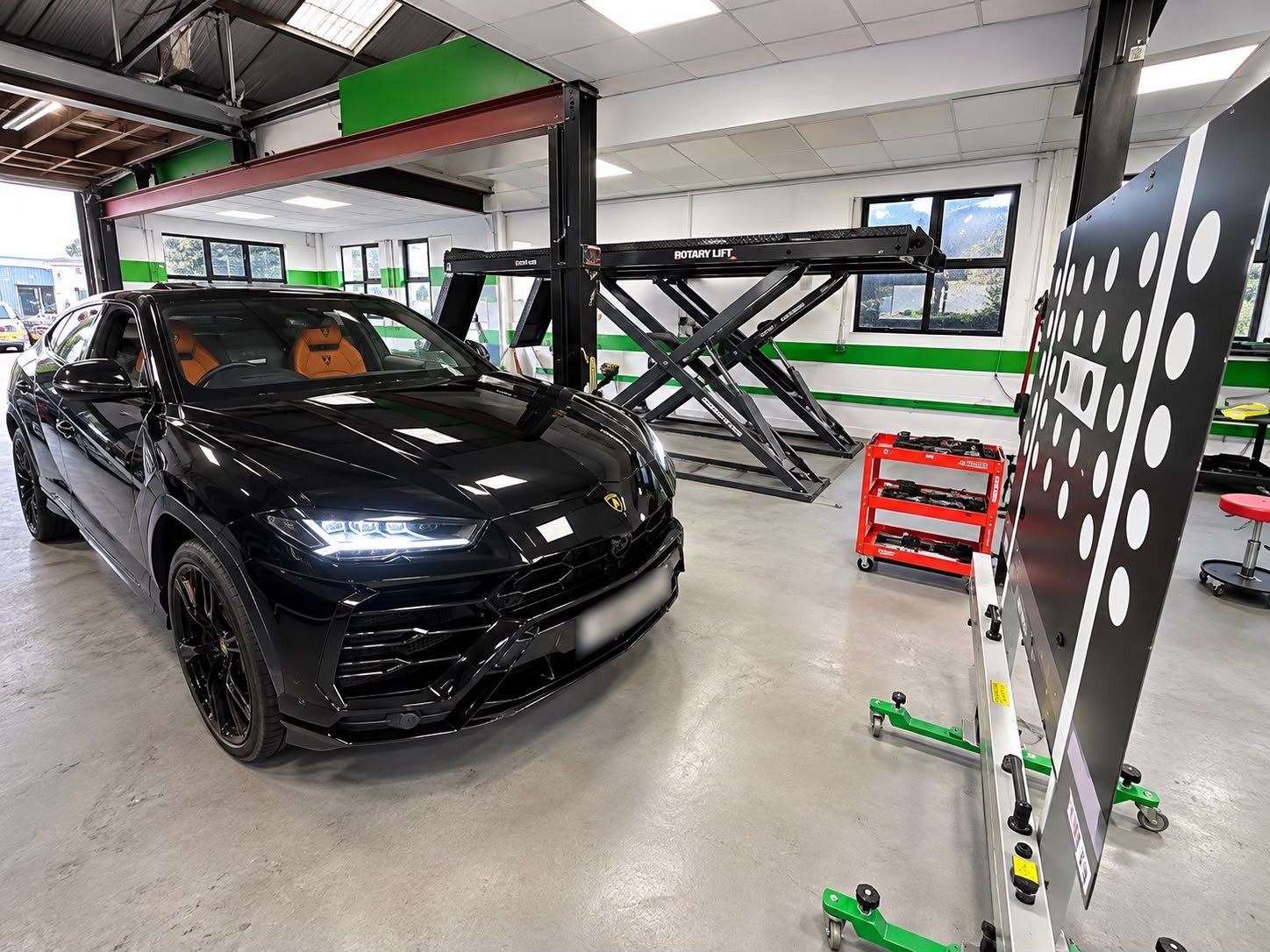
The manufacturer’s own targets, set at exact distances and heights from the car, on a level floor. We bring the full set to you.
What is ADAS?
The cameras, radar and sensors that help your car see the road, and why they need setting up properly.
Advanced Driver Assistance Systems: lane keeping, emergency braking, adaptive cruise, blind spot monitoring, parking assist and more.
Each one relies on a camera or radar watching a precise patch of road. Aimed right, they catch what you miss. Aimed even slightly wrong, they look in the wrong place, and the car trusts them anyway.
Mounted behind the windscreen. It reads lane markings, road signs and pedestrians, and has to be recalibrated after any screen replacement.
Lane assist, emergency braking, sign recognition
Most calibrations follow an ordinary repair. If any of these happened, your car probably needs one.
The front camera is mounted to the glass and moves with it.
Radar, parking sensors and often the rear camera sit behind it.
The rear camera is built in, so its guide lines move with it.
A change in thrust angle changes where every sensor points.
Ride height changes the angle each camera sees the road at.
Adaptive headlamps are aimed together with the camera.
Some manufacturers call for recalibration afterwards.
Accessories can block a sensor or change how the car sits.
The manufacturer decides which. Many cars need both, and we do both.
The manufacturer’s own targets, set at exact distances and heights from the car, on a level floor. We bring the full set to you.
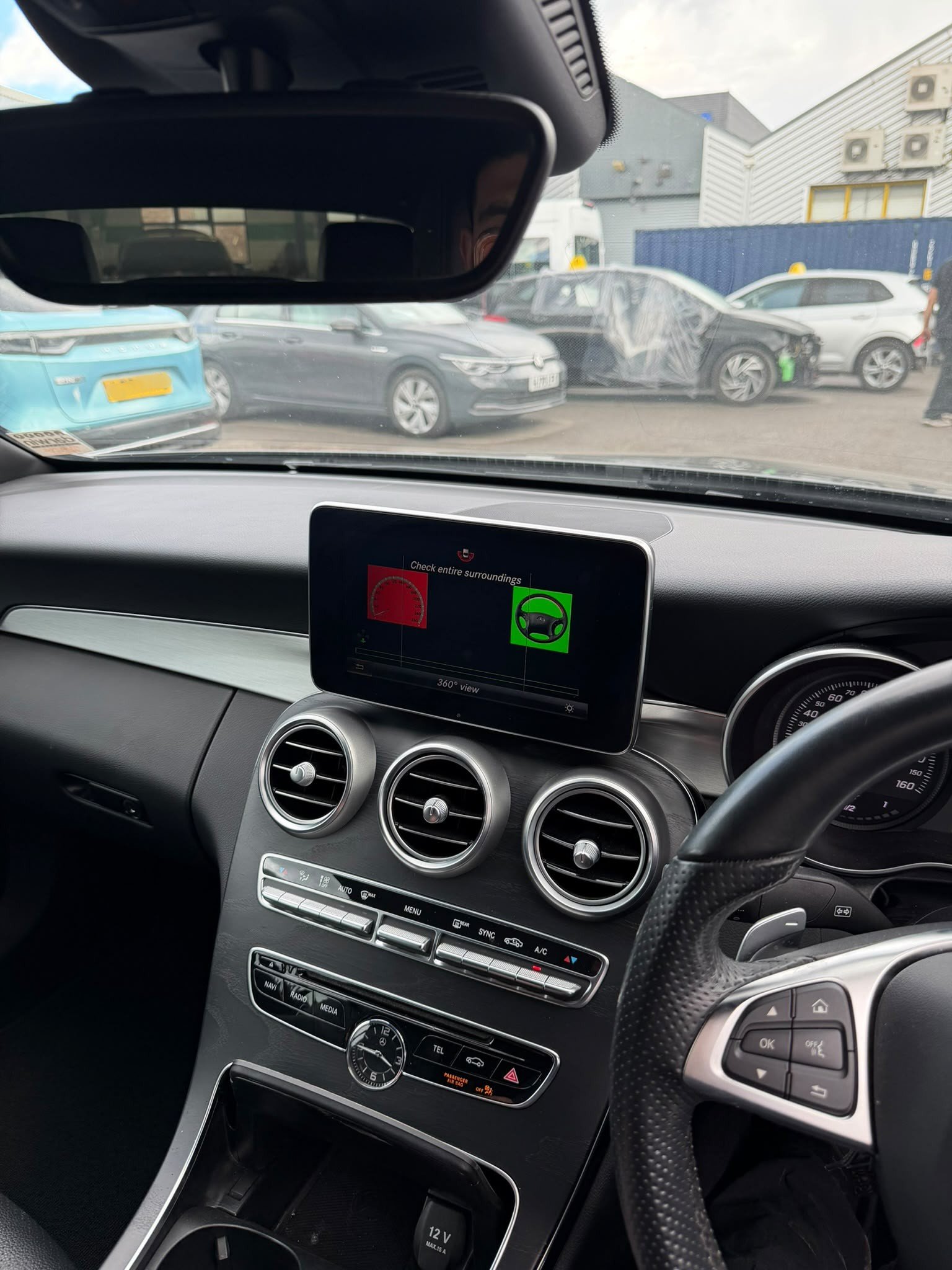
A road drive at set speeds while our diagnostic tool guides the camera or radar through its learning routine, with live data the whole way.
Get it checked and set to the manufacturer’s spec, at your home, workplace or bodyshop.
Small on paper. Enough for lane assist to nudge you the wrong way.
Usually, yes, but we check first rather than assume. The camera behind your windscreen is what your lane assist, emergency braking and adaptive cruise rely on to see the road, and a new screen puts it on a new bracket at a slightly different angle. A fraction of a degree at the glass becomes metres of error further down the road. So before any calibration we scan the car and check what the manufacturer requires for it. If it needs calibrating, we do it to the manufacturer’s procedure and give you the before and after readings in writing. If it doesn’t, we tell you, and you don’t pay for work the car doesn’t need.
Yes, we come to you: your home, your workplace or your bodyshop, across London and beyond, with the full set of targets and diagnostics in the van. Most calibrations take one to two hours, depending on the car and whether it needs static targets, a road drive or both. Every car and job is different, so instead of fixed slots we agree a time with you that fits around your day, and tell you how long we’ll need before we arrive. All we ask for is a flat, level spot with a few metres clear in front of the car. No dropping the car off, no waiting room, no lost day.
More than 20, from everyday hatchbacks to hand-built supercars: Audi, BMW, Mercedes-Benz, Porsche, Tesla, Volkswagen, Volvo, Land Rover, Ferrari, Lamborghini and more. What matters is that we follow each maker’s own procedure and targets for your exact car, not a one-size-fits-all routine. If yours isn’t listed, ask us. The answer is almost always yes.
We work alongside insurance-approved bodyshops, so if your car is going through an accident repair, the calibration can be done as part of that job, at the bodyshop, without you arranging anything extra. If you’re not sure how your repair is being handled, ask your bodyshop or message us and we’ll point you the right way.
The systems keep working, just not accurately, and that’s the danger. A camera that’s slightly out can read the lane in the wrong place, brake late or not at all, or keep a following distance that’s shorter than it shows you. Some cars flag it with a warning light; many don’t. The only way to know your car sees the road the way the manufacturer intended is to calibrate it and check the readings, which is exactly what we do.